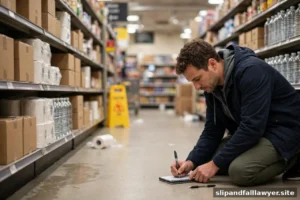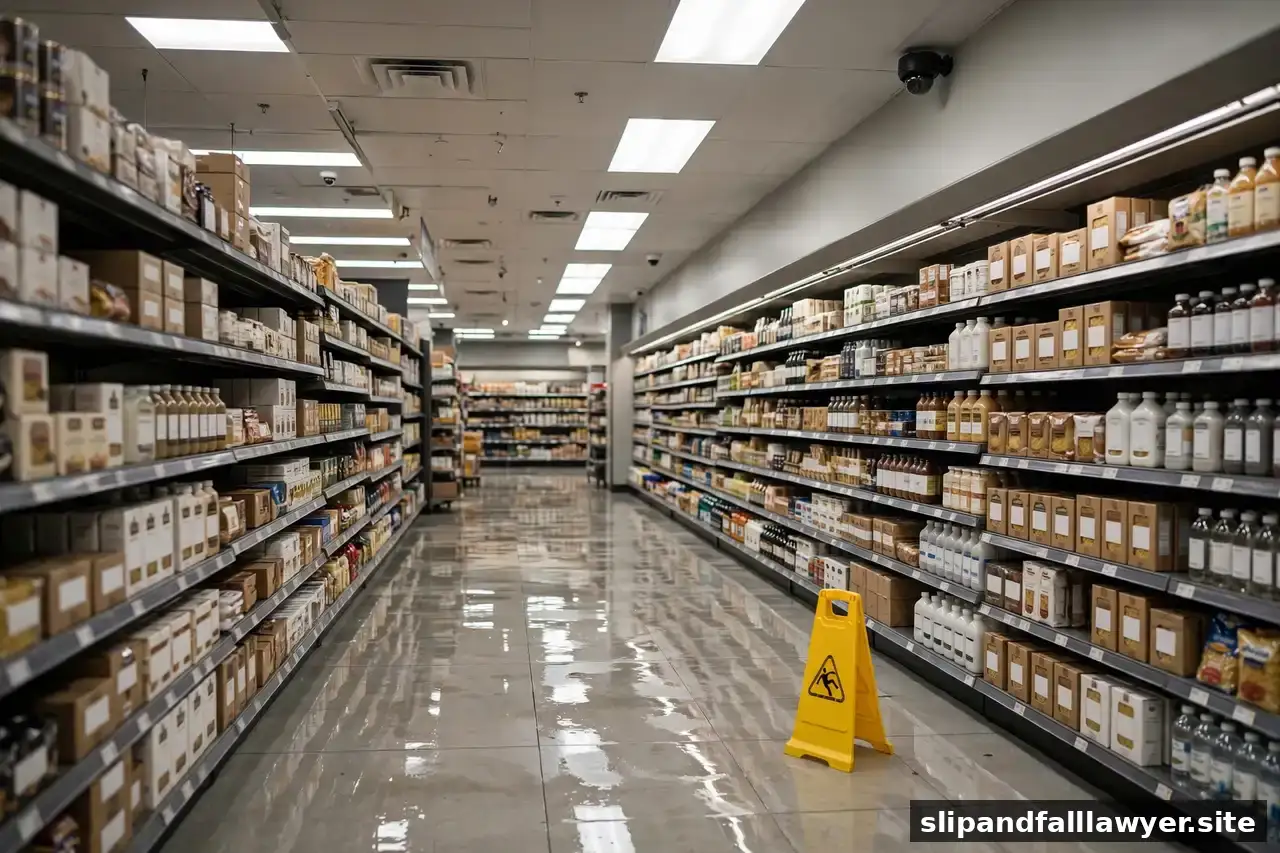
Of all the evidence that can shape a slip-and-fall claim, few pieces carry as much weight as video. A few seconds of surveillance footage can settle arguments that would otherwise drag on for months: Was there really water on the floor? How long had it been there? Were there warning signs? Was the fall as serious as the injured person says? Cameras do not forget, do not exaggerate, and do not take sides — which is exactly why both sides in a premises-liability dispute want the footage first.
Most falls happen in places covered by cameras: grocery stores, big-box retailers, restaurants, parking garages, apartment lobbies, and office buildings. Yet video is also one of the most fragile forms of evidence. It gets recorded over, taped over, or deleted on schedules measured in days, not months. Property owners are under no general obligation to hand it over voluntarily, and many systems are set to overwrite themselves automatically. If you want the footage, you have to move quickly, ask correctly, and put your request in writing.
Why Video Outweighs Almost Everything Else
Human memory is unreliable in the aftermath of a fall. You are in pain, embarrassed, and flooded with adrenaline; details blur. A store employee’s memory is filtered through loyalty to an employer. An insurance adjuster’s summary is filtered through the desire to pay less. Video cuts through all of that. It shows the floor as it actually was, the lighting as it actually was, and your body as it actually moved.
Adjusters and juries give footage special credibility because it is hard to argue with. A written incident report can be edited before you see it. A witness can change their story. But a timestamped clip showing a puddle sitting unmarked for twenty minutes before anyone slipped in it is the kind of evidence that ends debates about whether the property owner knew — or should have known — about the hazard. That concept, often called notice, is the backbone of most slip-and-fall claims, and our guide to proving negligence in a slip and fall case explains how notice fits into the bigger picture.
Video also protects honest claimants. If you slipped on a freshly mopped floor with no warning sign in sight, the footage proves you did nothing wrong. It shows you walking normally, at a normal pace, wearing ordinary shoes — details that dismantle the standard defense arguments before they are even made.
Footage Disappears Fast — Act Within Days
Here is the uncomfortable truth about surveillance systems: most of them are designed to forget. Digital recorders overwrite old footage on a rolling schedule. For many retail stores and restaurants, that cycle is somewhere between a few days and a few weeks. Smaller businesses with cheaper systems may keep even less. Once the loop comes around, the footage of your fall is gone, and no court order can bring back what was never preserved.
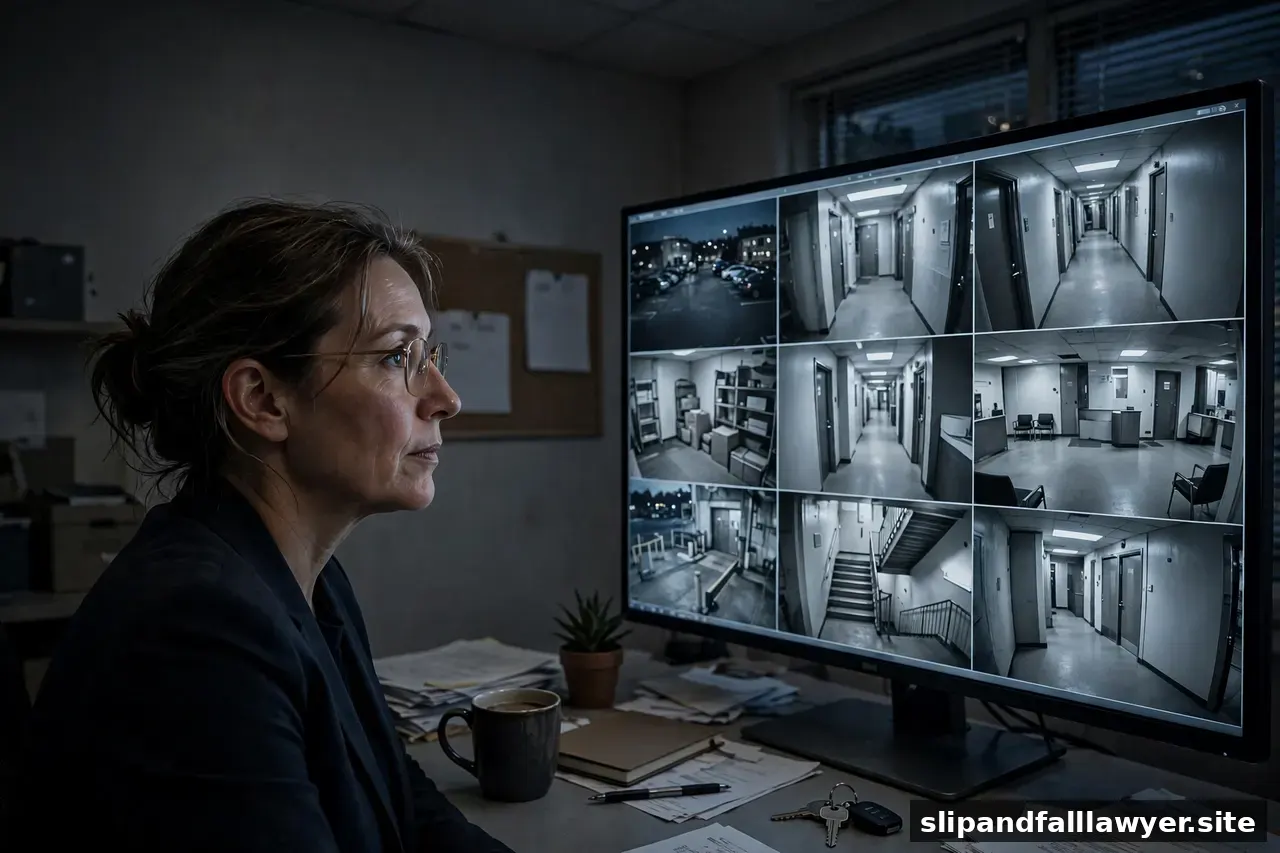
That means your timeline for securing video is measured in days, not the months or years a claim might take. The single most common way footage is lost is not malice — it is routine. Nobody at the store sat down and decided to destroy evidence; the system simply did what it always does. This is why the first hours and days after a fall matter so much for evidence, a theme we return to in our evidence checklist for what to gather after a fall.
If you are reading this weeks after your fall and have not asked about video, do not assume it is too late — but treat it as urgent. Some systems keep footage longer, some businesses archive clips of incidents separately, and cloud-based systems may retain recordings well beyond the local recorder’s cycle. The worst outcome is not asking and later learning the footage existed until the day before you called.
How to Request Footage at the Scene and After
Your first opportunity comes at the scene itself. After you have made sure you are safe and called for medical help if needed, tell a manager or supervisor — calmly and clearly — that you fell and that you want the incident captured on the store’s cameras preserved. Get that person’s name and title. Ask them to file an incident report, and ask for a copy or at least the report number. Then, separately, ask who handles video requests for the property, because the person at the front desk often is not that person.
Follow up the same day in writing. An email or letter creates a paper trail that a verbal request never will. Address it to the store manager and, if you can identify them, the property owner or management company. State the date, the approximate time, and the exact location of the fall (“the produce aisle near the entrance,” not just “your store”). Describe the hazard. Ask specifically that all video recordings covering that area from at least one hour before to one hour after the fall be preserved and provided.
Keep copies of everything you send, and note the dates, times, and names of everyone you speak with. If a manager tells you verbally that the cameras “weren’t working” or “don’t cover that area,” write that down too, with the date and who said it. Statements like that have a way of changing later, and your contemporaneous notes will matter.
What If They Refuse to Share It?
Expect resistance. Businesses are not required to hand footage to a private individual on request, and many will decline, citing policy. A refusal is not the end of the road; it is the reason the written request matters. Once a formal legal process begins, attorneys can obtain footage through discovery, and courts take a dim view of evidence that disappears after a party was told to keep it. Your job at this stage is not to win the footage — it is to make sure the request is documented so the footage, or its absence, can be addressed properly later.
The Preservation Letter: Putting Them on Notice
A preservation letter — sometimes called a spoliation letter — is a formal written demand that the property owner keep all evidence related to your fall, with video named explicitly. It is one of the most important documents you or an attorney can send early in a claim. Its power comes from a simple principle: once someone is told that evidence may be needed for a legal claim, allowing it to be destroyed looks terrible, and courts can penalize parties that let relevant evidence vanish after being warned.
A good preservation letter identifies you, the date and location of the incident, and demands that all surveillance video, digital recordings, and related footage covering the area be preserved in its original form — not summarized, not excerpted. It should cover a window of time around the fall, ask that automatic overwriting be suspended for the relevant cameras, and request that any incident-related clips already pulled aside be kept as well. It should be sent to the business, the property owner, and the management company if they are different entities, because the cameras may belong to any of them.
You can send this letter yourself, but there are reasons many people have an attorney do it. A letter on legal letterhead signals that the claim is serious and that the recipient’s handling of evidence will be scrutinized. It also ensures the language covers the right parties and the right time windows. Either way, send it promptly — a preservation letter that arrives after the footage has been overwritten protects nothing.
Send it by a method you can prove: certified mail with return receipt, or email with a read confirmation, and keep copies. If the business later claims it never received notice, your proof of delivery answers that.
What Good Footage Actually Proves
When you do get the video, watch it with a critical eye — ideally alongside someone experienced in these claims. Footage can establish several elements at once. First, the hazard itself: the spill, the ice patch, the bunched-up mat, the broken step, visible in the frame. Second, duration: if the timestamp shows the hazard sitting there for a meaningful stretch before your fall, that supports the argument that the property owner had time to discover and fix it.
Third, the absence of warnings: no wet-floor sign, no cones, no employee standing guard. Fourth, your own conduct: walking at a normal pace, looking where you were going, wearing reasonable footwear. And fifth, the mechanics and severity of the fall itself — how you landed, whether you struck your head, how long you were down before help arrived. All of this feeds directly into both liability and the seriousness of the injuries, which is why footage often features prominently in the demand letter that opens settlement negotiations.
Be honest with yourself about what the video shows. If it shows you sprinting through a clearly marked wet area while looking at your phone, you need to know that before the other side’s adjuster does. Surprises are what sink claims; preparation is what saves them.
When the Footage Is Gone or Never Existed
Sometimes there is simply no video. The cameras were decorative. The system was down. The angle missed the aisle. The retention period lapsed before anyone asked. A missing tape is frustrating, but it is not fatal to a claim — people won premises-liability cases for decades before surveillance cameras were everywhere.
When video is unavailable, the claim shifts to the other pillars of proof: the incident report, witness statements, your own photographs of the hazard, maintenance and cleaning logs, weather records for outdoor falls, and your medical documentation. Each of these is weaker alone than video would have been, which is why you need more of them, gathered more carefully. Walk through our evidence checklist and treat every item as twice as important when there is no footage to fall back on.
Also document the absence itself. If you asked for video and were told none exists, keep the written request and the response. If cameras were visible at the scene but the business later claims there was no recording, that inconsistency is worth noting. The story of the missing video can become evidence in its own right.
How Insurance Adjusters Read Fall Videos
Assume the adjuster will watch the footage frame by frame, looking for reasons to reduce the claim. They will study your gait, your speed, and your attention. They will zoom in on your shoes. They will check whether you paused, looked down, or seemed to notice the hazard before stepping into it. They will compare the timestamp with the incident report for discrepancies.
This scrutiny is exactly why you should review the footage yourself first, with clear eyes, before it shapes negotiations. If the video is favorable, it becomes the centerpiece of your demand package. If it is mixed, you plan around it — emphasizing the hazard’s duration, the lack of warnings, or the property’s maintenance failures, the elements covered in our guide to proving negligence. Either way, you want to be the person in the room who has actually watched the tape, not the one hearing about it secondhand.
One more practical note: if the business provides footage, save it in multiple places immediately and do not edit it. Keep the original file exactly as received, with its metadata intact. Edited or excerpted clips invite arguments about what was cut out.
Putting It Into Your Claim
Surveillance video is not magic, but it is the closest thing to a neutral witness a slip-and-fall case can have. Request it in writing on day one. Follow up with a formal preservation letter. Review what you receive honestly. And if the footage is gone, build the rest of your evidence twice as carefully. Handled correctly, video shortens disputes, strengthens demands, and gives both sides a shared set of facts to negotiate from — which is usually when fair settlements happen.
Disclaimer: This article is general information, not legal advice. Laws vary by state — consult a licensed attorney about your situation.