
The demand letter is the most important document you will write in your slip and fall claim. It is where months of evidence, medical records, and documentation get converted into a clear, professional case for compensation — and where the insurance adjuster forms their first serious impression of how you (or your attorney) will handle this claim. A strong demand letter does not beg, threaten, or exaggerate. It presents facts, attaches proof, and states a number with quiet confidence.
This guide walks through the letter section by section, with sample phrasing you can adapt. No invented amounts appear here — your demand figure must come from your own documented losses, not from a template.
Before You Write: Assemble the File
Do not draft the letter until your file is complete. You need: the incident report, scene photos, witness statements or contact information, all medical records and bills to date, documentation of lost income, receipts for out-of-pocket costs, and your daily journal. The demand letter references these documents; if a document does not exist yet, the claim it supports does not exist yet either.
Timing matters as much as completeness. Send the demand when your treatment has concluded or your condition has stabilized enough to project future needs reliably. Demanding too early forces you to guess at future costs — and guesses get discounted. For negotiation context once the letter goes out, see dealing with the insurance adjuster.
Section 1: The Header and Introduction
Open with the formal basics: your name and contact information, the date, the adjuster’s name and the insurance company, the claim number, and a subject line identifying the matter. Then a concise opening paragraph establishing who you are, when and where the fall occurred, and that you are presenting a demand for settlement.
Sample phrasing: “Re: Claim No. [number] — Demand for settlement arising from slip and fall on [date] at [location]. Dear [Adjuster Name]: I am writing to present my demand for settlement of the above-referenced claim. On [date], I was injured when I slipped and fell on your insured’s premises at [address/location]. This letter summarizes the facts, my injuries and treatment, and my resulting losses.”
Keep it to one paragraph. The adjuster handles hundreds of files; clarity in the first lines signals that the rest of the letter will be worth reading carefully.
Section 2: Statement of Facts
Narrate the fall as it happened: where you were, what you were doing, the condition of the surface, the hazard itself, the absence of warnings, and the immediate aftermath. Write in plain, chronological language. Every factual assertion here should trace to evidence — your photos, the incident report, witness accounts.
Sample phrasing: “At approximately [time] on [date], I was walking through [specific location] when I slipped on [describe hazard]. There were no warning signs, cones, or barriers in the area. The [surface] was [describe condition]. I fell [describe how you landed]. An employee, [name if known], witnessed the fall and completed an incident report (copy enclosed).”
Resist editorializing. “The store negligently failed to maintain safe premises” is a conclusion for later; in the facts section, the conditions speak for themselves. If you know the hazard’s history — a leak employees had mentioned, a step other customers had complained about — state it factually with the source: “Employee [name] stated the [hazard] had been present since [timeframe], per the enclosed witness statement.”

Section 3: Liability Discussion
Connect the facts to the property owner’s responsibility. Explain, in plain terms, why the owner is at fault: they created the hazard, knew about it, or should have discovered it through reasonable inspection — and failed to fix it or warn about it. Reference the specific evidence: inspection logs showing gaps, the absence of warning signs in your photos, witness statements about duration.
Sample phrasing: “Your insured [created / had notice of / should have discovered] the hazardous condition described above. [Cite the specific evidence: e.g., ‘The attached photographs show no warning signage in the area; the incident report confirms no inspection had been performed in the preceding [timeframe] per the store’s own logs.’] A reasonable inspection would have revealed and corrected this condition before my fall.”
Address obvious defenses preemptively but briefly. If comparative fault might be raised, one calm sentence noting the relevant facts (“The area was well-traveled and the hazard was not open and obvious, as the photographs demonstrate”) is stronger than a defensive paragraph. Our overview of settlement range factors explains how carriers weigh liability clarity when they read this section.
Section 4: Injuries and Medical Treatment
Walk through your injuries and treatment chronologically: emergency care, diagnoses, imaging, specialist referrals, therapy, medications, and your current condition. Name the providers and dates. Describe symptoms in concrete terms — what hurt, what you could not do — without melodrama. Then state the prognosis: fully recovered, still treating, or facing future care per your physician.
Sample phrasing: “I was transported by ambulance to [hospital], where I was diagnosed with [injuries]. I treated with [provider] from [date] to [date], undergoing [treatment]. As of this writing, [current status]. My treating physician, Dr. [name], has advised [prognosis / future treatment needs], as documented in the enclosed records.”
This section should read like a medical timeline, not a diary. The adjuster will cross-check it against the records you enclose — consistency between your narrative and the charts is what builds credibility. For guidance on assembling this documentation, see our medical documentation guide.
Section 5: Itemized Damages
List every category of loss with its documented total. Typical categories: past medical expenses (attach the bills), future medical expenses (per physician projection), lost income (employer verification), loss of earning capacity if applicable, and out-of-pocket costs (receipts). Present these as a clean itemized list — adjusters skim, and a scannable list gets fully read where a paragraph gets skimmed.
Sample phrasing: “My documented economic losses to date are as follows: [list each category with its total]. In addition, I have experienced [brief, factual description of pain, limitations, and life disruption — e.g., ‘persistent pain limiting sleep and daily activities for [duration], inability to [specific activities] for [duration]’].”
Then state your demand: a single figure that reflects your total documented losses plus fair consideration of non-economic harm, with negotiating room built in. Sample phrasing: “Based on the foregoing, I demand [amount] to settle all claims arising from this incident.” The amount itself must come from your real numbers — which is why understanding what determines your settlement range before you write is essential. Never pull a figure from a template or an online anecdote.
Section 6: The Closing and Deadline
Close professionally. State that the demand remains open for a reasonable response period — typically 30 days — and that you are prepared to pursue all available remedies, including filing suit, if the claim cannot be resolved. Provide your contact information and list the enclosed documents.
Sample phrasing: “This demand will remain open for thirty (30) days from the date of this letter. If we are unable to reach a resolution, I am prepared to pursue all available legal remedies. Please direct all correspondence to [contact]. Enclosures: [numbered list of every attached document].”
The deadline should be firm but reasonable. Empty threats undermine you; a stated willingness to file, from a claimant with a documented file, gets attention. And mean it — calendar the deadline, and be ready to act when it passes.
Enclosures: What to Attach
A demand letter without enclosures is just a letter. Attach, in numbered order: the incident report, scene and injury photographs, witness statements, all medical records and bills, proof of lost income (a letter from your employer on letterhead works), receipts for out-of-pocket expenses, and any expert or physician projection of future care. Reference each enclosure by number in the body of the letter so the adjuster can follow along: “as shown in Enclosure 4.”
Organize the package the way you want the adjuster to think: liability evidence first, then medical chronology, then financial losses. Number every page if the package is long. And keep an identical copy for yourself — when the adjuster later claims a document was never received, your numbered, mailed copy ends the discussion.
Tone, Length, and Common Mistakes
Aim for professional and restrained throughout — the tone of a competent attorney, whether or not you have one. Keep the letter focused; most effective demands run a few pages plus enclosures, not dozens of pages. Common mistakes: demanding before treatment concludes, including undocumented losses, emotional language or insults directed at the adjuster, ultimatums you will not enforce, and forgetting to list enclosures (an unlisted enclosure may as well not exist).
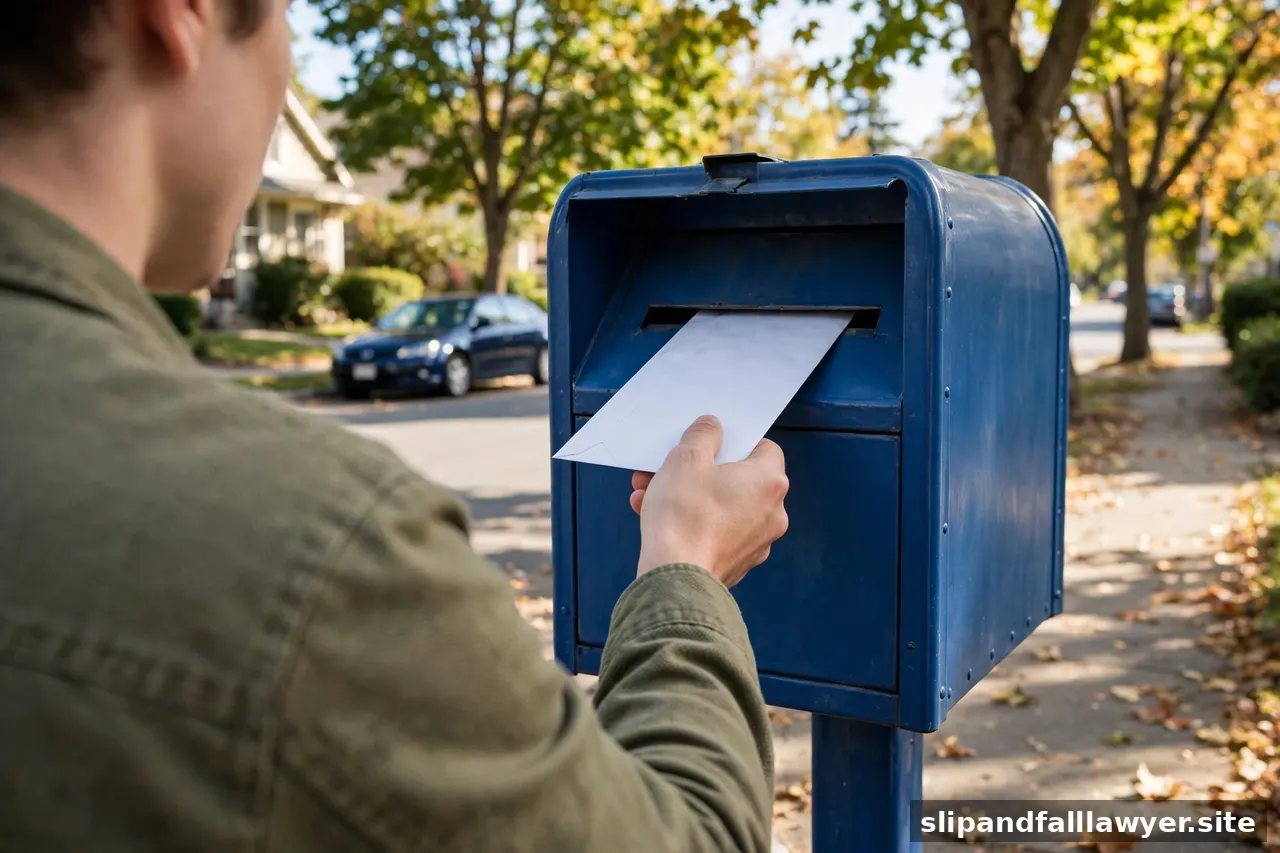
Proofread ruthlessly. A demand letter with wrong dates, misspelled names, or arithmetic errors tells the adjuster the file is sloppy — and sloppy files get low offers. Have someone else read it before it goes out. Then send it by certified mail or another trackable method so the response deadline has a provable start date, keep a copy with proof of mailing in your file, and calendar the response deadline the same day.
Disclaimer: This article is general information, not legal advice. Laws vary by state — consult a licensed attorney about your situation.
A demand letter is not creative writing — it is evidence organized into an argument. Facts first, proof attached, number stated plainly, deadline set firmly and fairly. Write it that way, and the adjuster reading it will understand exactly what kind of claimant they are dealing with: a prepared one who has done the work, kept meticulous records, and fully expects to be taken seriously.