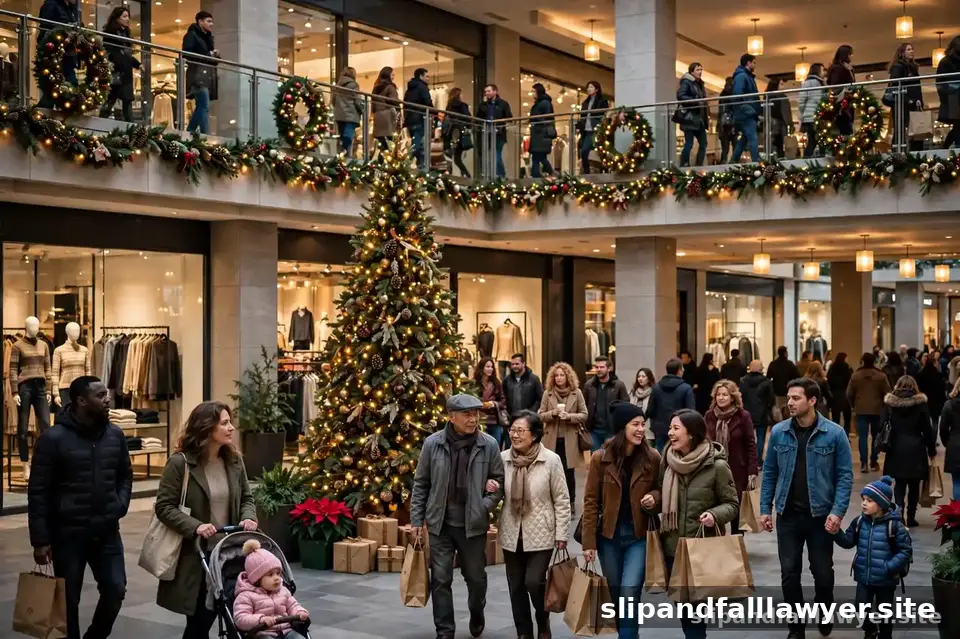
From late November through December, American retail turns into a contact sport. Crowds surge, parking lots overflow, decorations go up, seasonal staff flood in, and spills that would be mopped in minutes in February sit for an hour on the Saturday before Christmas. It is no coincidence that slip-and-fall claims spike during the holiday shopping season — the same hazards exist year-round, but the crowds, the rush, and the seasonal chaos multiply them.
This guide looks at why holiday shopping creates a perfect storm for falls, which hazards spike, how the law treats a store’s duty during its busiest weeks, and what to do if you are injured in a crowded store or mall this season.
Why the Holidays Are Peak Fall Season
Several forces converge in November and December. Foot traffic in major retail centers can multiply several times over, which means more tracked-in rain and snow, more spilled drinks, more dropped merchandise underfoot, and more restroom traffic overwhelming cleaning schedules. Stores extend hours and hire temporary workers who may be unfamiliar with spill-response procedures. Displays get taller, aisles get narrower, and promotional pallets appear in walkways that were clear in October.
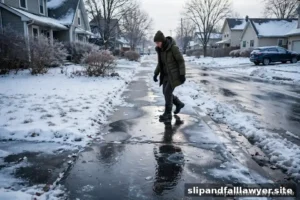
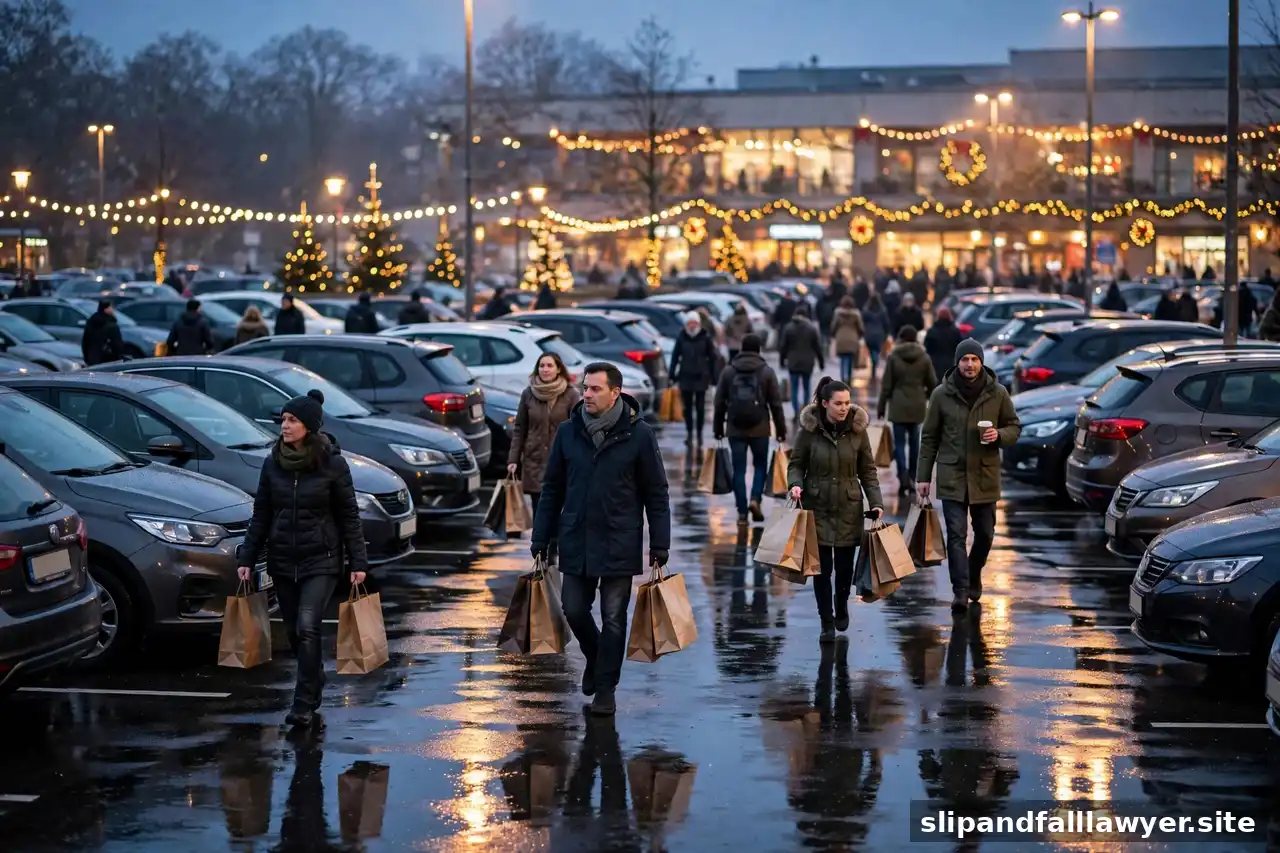
Outside, the picture is no better. Parking lots designed for normal volume overflow onto unpaved areas, medians, and poorly lit peripheral spaces. Shorter days mean most evening shopping happens in darkness, when uneven pavement, curbs, and ice patches are hardest to see. Add seasonal weather — rain in the South, snow and ice in the North — tracked in by thousands of shoes, and entrance zones become some of the most dangerous square footage in retail. Our rundown of where slips happen most covers these hotspots in detail.
Hazard Spike #1: Crowds and Crush Conditions
Door-buster events, product launches, and Black Friday-style rushes create crowd densities that retail floors were never designed for. In a crush, shoppers cannot see the floor at all — they move where the crowd moves, step where the crowd steps. A spill, a dropped item, or a bunched-up mat becomes invisible until someone is already on top of it.
Stores have a duty to manage foreseeable crowd conditions: controlling entry flow, staffing entrances, keeping aisles and fire exits clear, and securing displays against being knocked over. When a store advertises an event guaranteed to draw a mob but staffs it like a quiet Tuesday, that gap between the foreseeable risk and the actual precautions is exactly what plaintiffs’ lawyers focus on. If you are caught in a dangerous crowd situation, move toward the edges, avoid the center of surges, and report unsafe conditions to staff immediately — your report creates a record that the store was on notice.
Hazard Spike #2: Parking Lots After Dark
Holiday parking lots combine every risk factor at once: overflow parking on uneven or unpaved surfaces, poor lighting in peripheral areas, icy or wet pavement, shopping carts left in driving lanes, and distracted drivers hunting for spaces while pedestrians weave between cars. Falls here are common and often serious, because victims hit asphalt or concrete with no warning.
Property owners and managers generally must keep parking areas reasonably safe — adequate lighting, repaired potholes and broken curbs, cleared and treated surfaces in winter weather, and cart corrals that actually get used. Document the lot’s condition with photos if you fall: lighting levels, surface defects, and the absence of salting or sanding all matter. Note the time, because “after dark” plus “inadequate lighting” is a combination courts take seriously.
Hazard Spike #3: Decorations and Seasonal Displays
Holiday decor is festive and frequently hazardous. Extension cords for light displays snake across walkways. Artificial trees and oversized displays jut into aisles. Fake snow, glitter, and decorative scatter create slippery surfaces. Temporary structures — photo-op backdrops, gift-wrap stations, pop-up kiosks — appear in traffic paths with minimal anchoring.
Decorative choices do not excuse unsafe conditions. A display that narrows an aisle below a safe width, cords left unsecured across a walkway, or a wet “winter wonderland” feature without mats and warnings are all foreseeable hazards the store chose to create. Photograph the display exactly as it was, including how it affected the walking path — stores dismantle seasonal displays fast, and the evidence disappears with them.
Hazard Spike #4: Spill Response Under Pressure
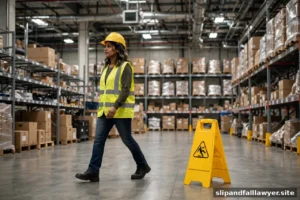
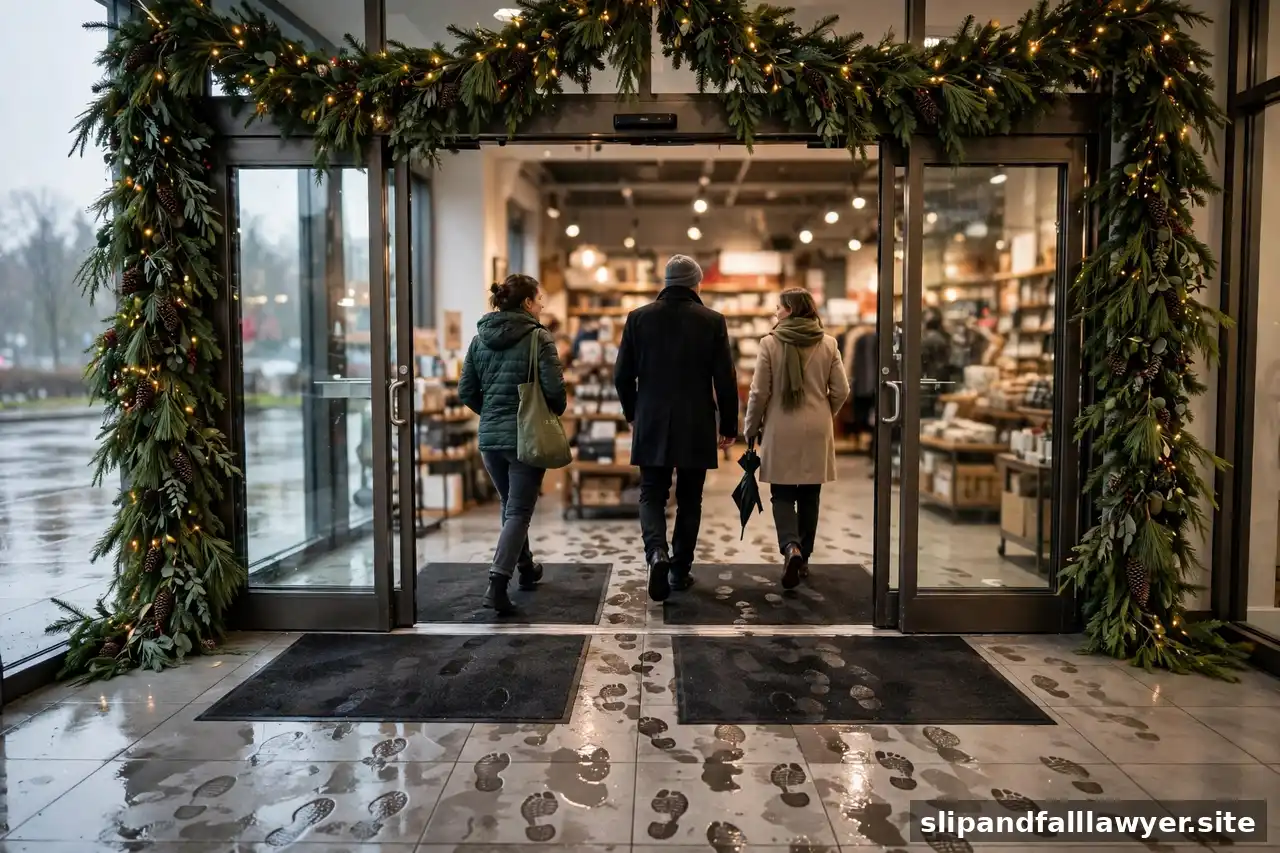
The classic grocery-aisle spill case gets harder for stores during the holidays — and easier for injured shoppers. With customer volume tripled and seasonal staff stretched thin, the gap between a spill happening and someone addressing it stretches. Legally, that cuts against the store: the busier the store, the more frequent its inspections and spill response should be, because the risk is obviously higher.
Courts look at whether the store’s procedures matched the conditions. A store that inspected aisles every thirty minutes in October but kept the same schedule during the December rush — while foot traffic quintupled — will struggle to call that reasonable. Evidence that matters: the store’s written inspection procedures, the actual sweep logs for the day (ask for them; gaps in the log are telling), staffing levels versus normal operations, and how long the hazard was present. Witnesses who saw the spill before your fall are gold — their testimony establishes the store had time to act and did not.
A Store’s Duty During Its Busiest Weeks
The legal standard does not relax because a store is busy — if anything, the duty of care scales with the foreseeable risk. A retailer that invites the public in during the year’s highest-traffic weeks must take precautions proportionate to those conditions: more frequent floor inspections, entrance mats rated for heavy wet-weather traffic, adequate staffing for spill response, crowd management for advertised events, and parking-lot lighting and maintenance suited to overflow use.
What this means in practice: “we were too busy to mop” is not a defense. It is closer to an admission. The question a jury will ask is whether the store’s precautions were reasonable for the conditions it created and profited from. Document everything that shows the gap — overflowing trash near restrooms, empty paper-towel dispensers, mats saturated and curling at the edges, aisles blocked by restocking pallets during shopping hours.
Holiday Events and Temporary Attractions
Beyond ordinary shopping, the season brings ticketed and promotional events onto retail property: tree-lighting ceremonies, Santa photo lines, charity gift-wrapping stations, outdoor holiday markets, and ice rinks installed in mall parking lots. These attractions concentrate large crowds in spaces designed for something else, often with temporary flooring, cables, barriers, and queue mazes that would never pass muster as permanent installations.
Property owners remain responsible for the safety of these setups. Temporary does not mean exempt: queue lines need slip-resistant surfaces and clear egress, electrical cables must be ramped or buried, and attractions operating after dark need dedicated lighting. If you are injured at a holiday event on commercial property, document the temporary setup itself — barriers, flooring, lighting rigs — because it will be dismantled within days. Also note who operated it: the property owner, the retailer, or a third-party event company, since each may share liability.
Surveillance Footage: Act Fast
Holiday-season stores are among the most camera-covered retail environments in existence — which is good news, because footage can prove the hazard’s duration and the store’s inaction. The bad news: holiday footage is overwritten quickly, sometimes within days, as high-traffic recording fills storage. Request preservation of surveillance video immediately and in writing, covering the hours before your fall as well as the fall itself. Our guide to surveillance video evidence explains exactly what to ask for and how to phrase the preservation request.
Beyond video, holiday cases benefit from evidence civilians can gather: photos of the scene (including crowd density and lighting), the incident report (insist one is created and get a copy), names of witnesses (fellow shoppers are often willing to help in the moment but impossible to find later), and your receipt or transaction record proving you were there at that time.
If You Fall While Holiday Shopping
- Get help and stay put if you are hurt. Ask staff to call for medical assistance. Do not let embarrassment rush you out — adrenaline masks injuries.
- Report it before leaving. Insist on a written incident report with the exact location, the hazard, the time, and the names of employees involved. Photograph the report or get a copy.
- Photograph the hazard and the scene. The spill, the display, the lighting, the crowd conditions. Wide shots and close-ups.
- Collect witness information. Fellow shoppers disperse fast; get names and phone numbers on the spot.
- Keep your shoes and receipt. Your footwear rebuts the “wrong shoes” argument, and the receipt timestamps your visit.
- Seek medical care the same day. Describe exactly how the fall happened so the mechanism of injury is in the record from the start.
- Do not give a recorded statement to the store’s insurer before understanding your claim. Polite, brief, and factual is enough at the scene.
A Special Note for Parents and Older Shoppers
Two groups deserve extra caution. Children dart through crowds at exactly the height of displays and fixtures, and a fall that bruises an adult can seriously injure a small child. Older shoppers face the season’s worst combination: crowded, rushed environments plus the higher injury severity that comes with age — hip fractures from holiday falls are a grim seasonal staple. If you shop with kids or elderly relatives, slow down, use entrances with mats and handrails, avoid peak crush hours when possible, and speak up immediately about hazards you spot. Campuses empty out for the holidays, but the same seasonal hazards apply there too — see our guide to campus slip-and-fall claims if a student is injured on school property during the break.
The holiday season should end with gifts, not medical bills. Stores know the risks spike in December — the law expects their precautions to spike with them. If yours did not, the evidence you gather in the first hours will decide whether your claim succeeds.
Disclaimer: This article is general information, not legal advice. Laws vary by state — consult a licensed attorney about your situation.