
In a slip-and-fall claim, your injuries are only as real — in the eyes of an insurance company — as your medical records say they are. Adjusters do not evaluate pain; they evaluate paper. They read treatment notes, imaging reports, prescription histories, and therapy logs, looking for consistency, continuity, and credibility. A well-documented injury record turns your experience into evidence. A thin or gap-filled record turns it into an argument.
This guide covers how to build that record from the first medical visit onward: which records to keep, how to handle gaps in treatment, how to maintain a pain journal that actually helps, and what to expect if the insurer requests an independent medical examination. Good documentation is not about exaggeration — it is about completeness. If it happened and it mattered, it should be in the file. Our overview of common slip and fall injuries pairs well with this guide if you want to understand what providers will be looking for.
Why Documentation Decides Claims
Consider how a claim is actually evaluated. Months after your fall, an adjuster who has never met you opens a file. They cannot see you wince when you stand up. What they can see is whether you went to urgent care the same day, whether the doctor noted the mechanism of injury, whether you attended all twelve physical therapy sessions or stopped after three, and whether your complaints were consistent from visit to visit. Every decision they make about the value of your claim flows from that paper trail.
Inconsistency is what they hunt for. Telling the ER your back hurts and telling the physical therapist a week later that it is your neck raises questions — even if both things are true and you simply emphasized different symptoms. Gaps raise questions too: six weeks with no treatment suggests, to an adjuster, six weeks of feeling fine. The goal of documentation is to leave no room for those inferences by creating a continuous, coherent record of injury, treatment, and recovery.
The Records to Keep From Day One
Think of your medical file as having two halves: the records providers create, and the records you create. For the provider half, keep copies of everything: emergency department and urgent care records, primary care visit notes, specialist referrals and reports, imaging orders and results (X-ray, MRI, CT), prescriptions, physical and occupational therapy notes, and discharge summaries. You are entitled to copies of your own records — request them periodically rather than scrambling at the end.
Just as important: make sure every provider knows the injury came from your fall, and check that the records say so. “Patient slipped on wet floor at grocery store on [date]” appearing consistently across providers ties the entire treatment history to the incident. When a record omits the cause, or worse, attributes your symptoms to something else, correct it promptly — amended records are normal and far better than contradictory ones.
For your own half of the file, keep a running folder with every bill and receipt: copays, prescriptions, braces, bandages, over-the-counter medications your doctor recommended, mileage to and from appointments, and pay stubs or employer letters documenting missed work. These out-of-pocket costs are recoverable in most claims, but only if you can prove them. A shoebox of receipts beats a memory of expenses every time.
Gaps in Treatment: The Silent Claim-Killer
Few things damage a claim faster than a gap in treatment. From the insurer’s perspective, the logic is brutal and simple: if you were really hurt, you would have kept going to the doctor. Real life is messier — people miss appointments because of work, childcare, transportation, cost, or because a doctor said “come back if it gets worse.” But the adjuster will not volunteer those explanations; they will simply discount your claim.
The fix is continuity. Attend every scheduled appointment. If you cannot make one, reschedule immediately rather than letting weeks pass, and make sure the rescheduling is documented. If a provider discharges you or says no further treatment is needed, get that in writing — a documented discharge is a clean ending, while simply stopping looks like abandonment. And if cost is the barrier, say so: ask about payment plans, use your health insurance, and document the financial strain rather than silently disappearing from care.
There is one legitimate reason for a treatment gap: you genuinely recovered, then symptoms returned or worsened. That happens, especially with back and soft tissue injuries. If it happens to you, return to the doctor promptly and explain the timeline clearly so the record shows a recurrence, not an unexplained absence.
The Pain Journal: How to Keep One That Helps
A pain journal is a daily log of how the injury affects your life, and it serves two purposes: it keeps your own memory honest over the months a claim can take, and it provides vivid, specific detail that medical notes — written in clinical shorthand — often lack. “Couldn’t lift my toddler for three weeks” communicates what “shoulder pain, 6/10” does not.
Keep it simple and consistent. Each day, note your pain level, where it hurts, what activities were difficult or impossible, what medications you took, and how you slept. Be honest on good days too — a journal that records improvement is more credible than one that claims constant agony for six months. Two to three minutes a day is enough; the power is in the accumulation.
A few cautions. Write for accuracy, not for effect — exaggeration destroys credibility if discovered. Keep the journal private; do not post excerpts on social media. And understand that in litigation the journal may become discoverable, so write nothing you would not be comfortable having read aloud. Factual, dated, consistent: that is the standard.
Imaging and Specialist Reports
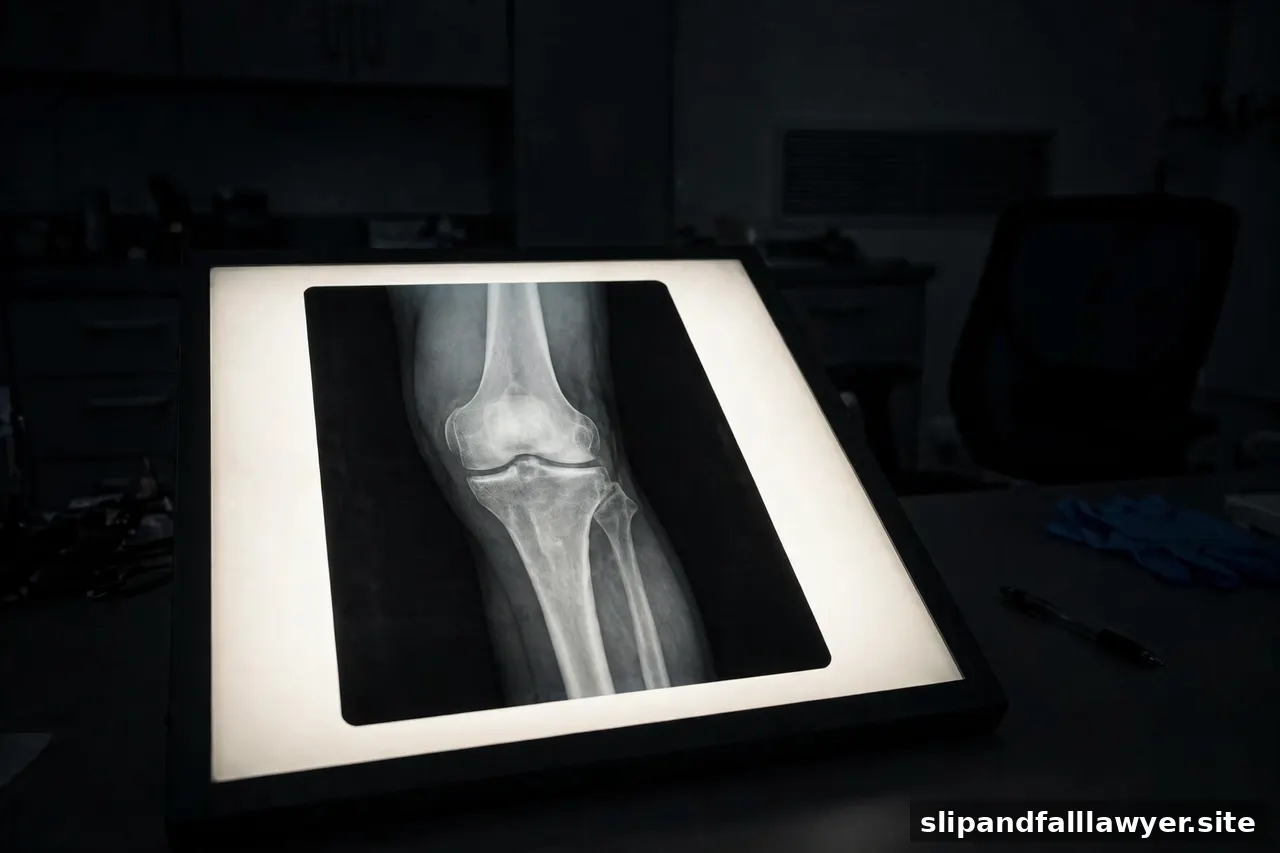
Diagnostic imaging often becomes the objective anchor of an injury claim. X-rays show fractures; MRIs reveal disc herniations, ligament tears, and other soft tissue damage that X-rays miss. If your doctor orders imaging, get it done promptly — delays here look like disinterest — and keep copies of both the images and the radiologist’s written report.

Specialist reports carry similar weight. An orthopedist’s assessment of a fracture, a neurologist’s evaluation of persistent headaches, a pain management specialist’s treatment plan: each adds a layer of professional corroboration. If your primary care doctor refers you to a specialist, go. Declined referrals read as declined seriousness, and the specialist’s findings often document aspects of the injury that general visits miss.
Independent Medical Exams: What to Expect
At some point the insurer may request that you attend an “independent” medical examination — an evaluation by a doctor of their choosing. Despite the name, this physician is paid by the insurance company, and their report will be used to evaluate — and often to minimize — your claim. Knowing this in advance keeps the experience in perspective.
Prepare the way you would for any medical appointment: bring a list of your symptoms, injuries, and treating providers, and be ready to describe the fall and its aftermath factually. Answer questions honestly and completely, but do not volunteer speculation — “I don’t know” and “I don’t remember” are acceptable answers. Do not exaggerate, but do not minimize either; downplaying your pain to seem tough produces a report that says you are fine. Note the date, duration, and what the examiner did, and tell your attorney promptly if you have one. The exam is typically brief; your own treating providers’ records, built over months, remain the core of your case.
Pre-Existing Conditions: The “It Was Already There” Argument
If you had any prior injury or condition in the same body part — an old back problem, a previously sprained ankle, arthritis — expect the insurer to argue that your current symptoms come from that history, not the fall. This is one of the most common defense arguments in injury claims, and the way to defeat it is documentation that distinguishes the before from the after.
Be upfront with every treating provider about your medical history; hidden history discovered later looks like deception, while disclosed history lets the doctor document the difference. Ask providers to note specifically what changed after the fall: new symptoms, worsened pain levels, new limitations, new imaging findings compared against any older records. The legal principle in most places is that a property owner takes the injured person as they find them — if the fall aggravated a pre-existing condition, the aggravation is still compensable. But “aggravation” has to be proven with records, which means the comparison between your before and after needs to be explicit in the file, not left for anyone to infer.
Organizing It All
A strong injury record is also an organized one. Whether you use a physical binder or a cloud folder, keep sections for medical records, bills and receipts, imaging, correspondence with insurers, your pain journal, and employment records of missed work. Chronological order within each section. When it comes time to write the demand letter that opens settlement talks — or to hand the file to an attorney — an organized record signals a serious, credible claim and makes everyone’s job easier.
Finally, remember the long view. Some fall injuries produce costs and limitations that unfold over years, not weeks — future treatment, ongoing therapy, permanent restrictions. Our guide to the long-term costs of fall injuries explains why documenting the full trajectory matters from the start. The record you build today is the foundation for accounting for tomorrow.
Medical documentation is unglamorous work — appointments kept, papers filed, journals updated. But in the world of injury claims, it is the work that converts suffering into proof. Be thorough, be consistent, and be honest, and your record will speak clearly when it matters most.
Disclaimer: This article is general information, not legal advice. Laws vary by state — consult a licensed attorney about your situation.