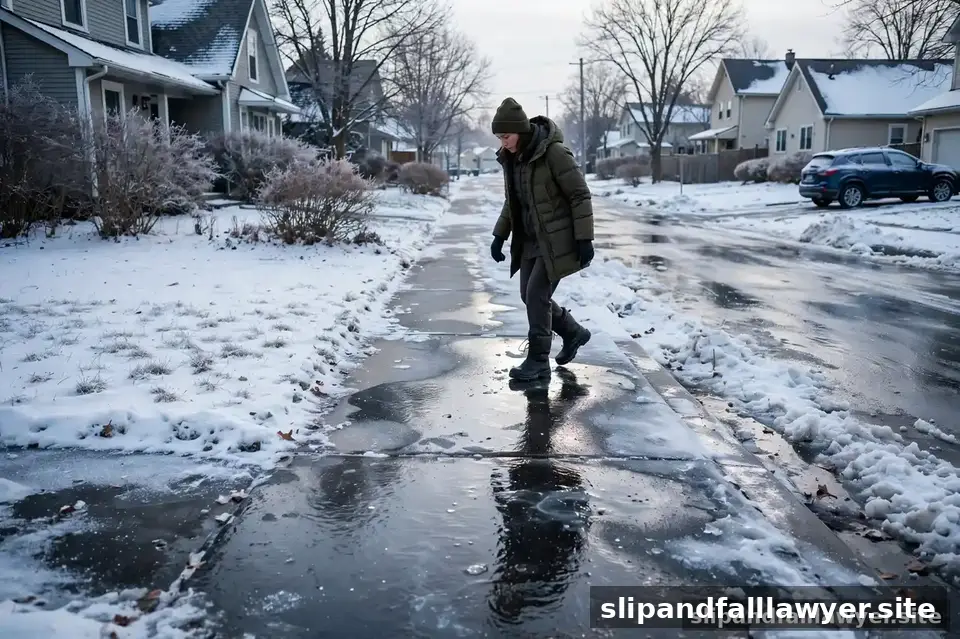
Every winter, emergency rooms fill with the same story: a patch of black ice on a walkway, a snow-packed parking lot, a fall that breaks a wrist or a hip in seconds. As the 2026–27 winter season approaches, property owners are restocking salt and signing plowing contracts — and anyone who walks, shops, or works outdoors should understand how ice-and-snow slip liability actually works. The rules are more nuanced than “the owner should have shoveled,” and they vary a lot by locality.
This guide covers the general principles courts apply to winter slip-and-fall cases: what duty property owners owe during and after storms, how landlord and city responsibilities divide, why your footwear and your own caution matter to the outcome, and the evidence steps that make or break these claims.
Why Winter Falls Are Legally Different
Most slip-and-fall hazards — a spill, a broken tile, a loose handrail — are things the property owner created or allowed to persist. Ice and snow are different: they arrive from the sky, affect entire regions at once, and refreeze overnight. Courts recognize that no property owner can keep every square foot of pavement bone-dry through a storm, so winter cases turn heavily on timing, reasonableness, and local rules.
The core question is the same one that governs all premises cases — did the property controller act reasonably under the circumstances? — but “reasonable” during a blizzard looks very different from “reasonable” three sunny days after one. Our explainer on duty of care covers the general framework; winter adds a layer of weather-specific judgment calls on top of it.
One more complication: many cities and towns have their own ordinances about sidewalk clearing — who must clear, how quickly, and what penalties apply. These local rules shape expectations but do not automatically decide civil liability. A violated ordinance can be evidence of negligence, not proof of it, and in some places the duty to clear a public sidewalk falls on the adjacent property owner while in others it does not. Because this is genuinely local, treat any “rule” you hear as a starting point for checking your own city’s code, not as the answer.
The Storm-in-Progress Principle
Many courts apply a practical rule: property owners generally are not expected to be out shoveling while the storm is still raging. The reasoning is straightforward — clearing during active snowfall or freezing rain is futile and can even be dangerous for the workers doing it. Under this principle, a fall that happens mid-storm is a much harder claim than a fall on ice that sat untreated for days after the skies cleared.
What matters most is the window after the storm ends. Once precipitation stops, the clock starts on what a reasonable owner would do: plow, shovel, salt, sand, and keep treating refreeze zones. How long is reasonable? There is no universal number — courts look at the severity of the storm, the type of property (a hospital entrance gets less slack than a vacant lot), the resources available, and what local custom expects. A commercial property with a snow-removal contract that never called the contractor looks very different from a homeowner who shoveled at dawn but could not prevent overnight refreeze.
Keep in mind this principle is a general trend, not a universal law. Some jurisdictions phrase it differently, some limit it to certain property types, and a few barely recognize it at all. It is one factor among many, and it never excuses ignoring a known, fixable hazard — like a downspout that dumps water across a walkway every winter, creating the same ice patch storm after storm.
Landlords, Businesses, and Cities: Who Owes What
Winter duty divides along lines of control:
- Businesses open to the public generally owe the highest practical duty: keeping entrances, walkways, and parking areas reasonably safe for customers, including treating ice and snow within a reasonable time after storms. A grocery store that never salts its entrance apron all winter is in a very different position from one caught mid-blizzard.
- Landlords typically control common areas — parking lots, shared walkways, exterior stairs — and their duty usually covers those areas. What the lease says matters: some commercial leases push snow removal onto tenants, and courts often (though not always) respect that allocation between the parties while still protecting injured visitors.
- Cities and municipalities are responsible for public streets and, in many places, public sidewalks — but claims against government entities come with special procedural hurdles, including short notice-of-claim deadlines and sometimes immunity for discretionary decisions like plowing priorities. A fall on a city sidewalk is not handled like a fall in a store parking lot, so identify the responsible government entity fast and check its claim procedures immediately.
- Homeowners owe duties to visitors and, in many localities, to pedestrians on adjacent sidewalks — but the standard is reasonableness, not perfection. A homeowner who made a genuine, timely effort to clear is in a far stronger position than one who ignored the walk all season.
When responsibility is split — say, a landlord hired a snow-removal contractor who never showed — the injured person can often pursue more than one party. Contractors who assume snow-removal duties can face liability for doing the job negligently, which is why those contracts and the contractor’s service logs become key evidence.
Your Footwear and Your Own Caution Matter
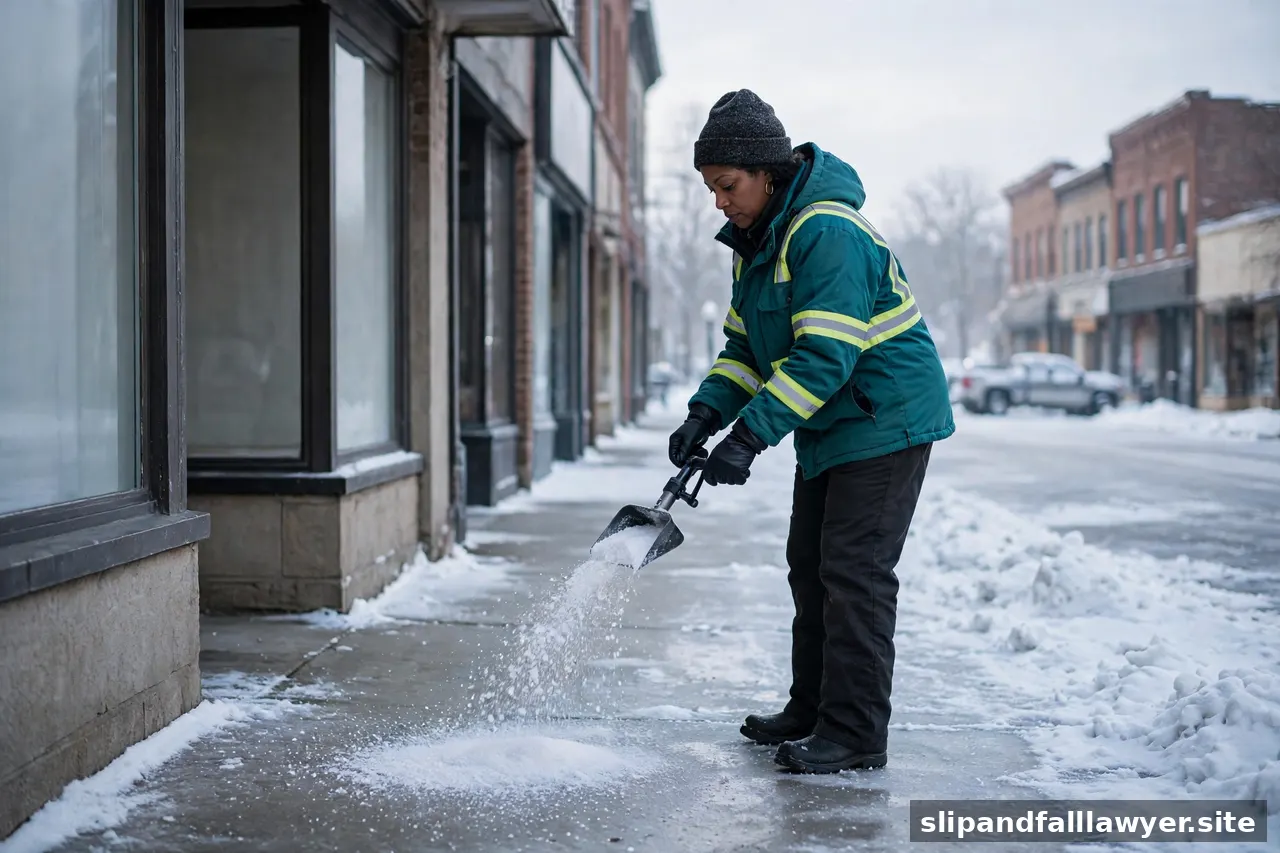
Winter cases are where comparative negligence hits hardest. Defense lawyers in ice cases almost always argue the injured person should have been more careful: wearing smooth-soled dress shoes in a snowstorm, staring at a phone while crossing an icy lot, or taking an obviously treacherous shortcut when a cleared path was available. In states that reduce or bar recovery based on the plaintiff’s own fault, these arguments can shrink or eliminate compensation — see our guide to comparative negligence for how the math works.
This is not about blaming victims; it is about how these cases are actually decided. Protect your claim the way you protect your body:
- Wear appropriate footwear for the conditions and keep the shoes afterward — they are evidence. Worn-smooth soles help the defense; sturdy tread helps you.
- Use cleared paths and handrails where they exist. Choosing the icy shortcut over the salted walkway will be Exhibit A for the other side.
- Do not post about the fall on social media. A photo of you hiking the weekend after a “serious” back injury is worth more to the defense than any argument they could buy.
- Report the fall promptly to the property owner or manager and get a copy of any incident report, as covered in what to do after a fall.
Evidence That Wins Winter Cases
Ice melts, snow gets plowed, and memories of “what the walkway looked like” fade fast. Winter claims live or die on evidence gathered in the first hours and days:
- Photograph everything immediately. The ice patch, the unsalted walkway, the snow piled against the door, the downspout pouring water across the path. Include wide shots for location context and close-ups of the surface. If your phone stamps time and location, leave that on.
- Capture the weather record. Save forecasts, storm-total reports, and temperature histories for the days before and after your fall. This establishes when the storm ended — the starting gun for the owner’s duty to clear — and whether refreeze conditions existed. The National Weather Service archives are free and authoritative.
- Document the owner’s snow plan — or lack of one. Did the property have a snow-removal contract? When did the contractor last visit? Were salt bins stocked? Were entrances treated? Ask in writing and preserve the answers. A contractor’s service log showing no visit for a week after a major storm is devastating evidence.
- Find witnesses. Other tenants, shoppers, or passersby who saw the untreated ice — or who fell themselves — corroborate that the hazard was open, persistent, and known.
- Keep the footwear and clothing. Bag the shoes you were wearing unwashed; the tread pattern and any ice-melt residue on them can matter.
- Get medical care the same day and describe the mechanism. “Slipped on ice in the parking lot” in the ER record ties the injury to the hazard from hour one.
Injuries Typical of Ice Falls
Ice falls are disproportionately severe because the victim gets no warning and no chance to break the fall. Wrist fractures (from bracing), hip fractures (especially in older adults), head injuries, spinal injuries, and torn knee ligaments are the classic patterns. These injuries often require surgery and extended rehabilitation, which is why winter cases, when liability is clear, tend to involve significant damages.
The severity cuts both ways medically: get evaluated even if you feel “mostly fine.” Hairline fractures and concussions declare themselves hours or days later, and a gap between the fall and the first treatment gives the defense room to argue something else caused the injury. The CDC’s fall-prevention resources are a useful reminder that falls are a leading cause of injury across age groups — winter ice just concentrates the risk.
Preparing for Winter 2026–27
Whether you own property or just walk on it, a little preparation prevents both injuries and lawsuits:
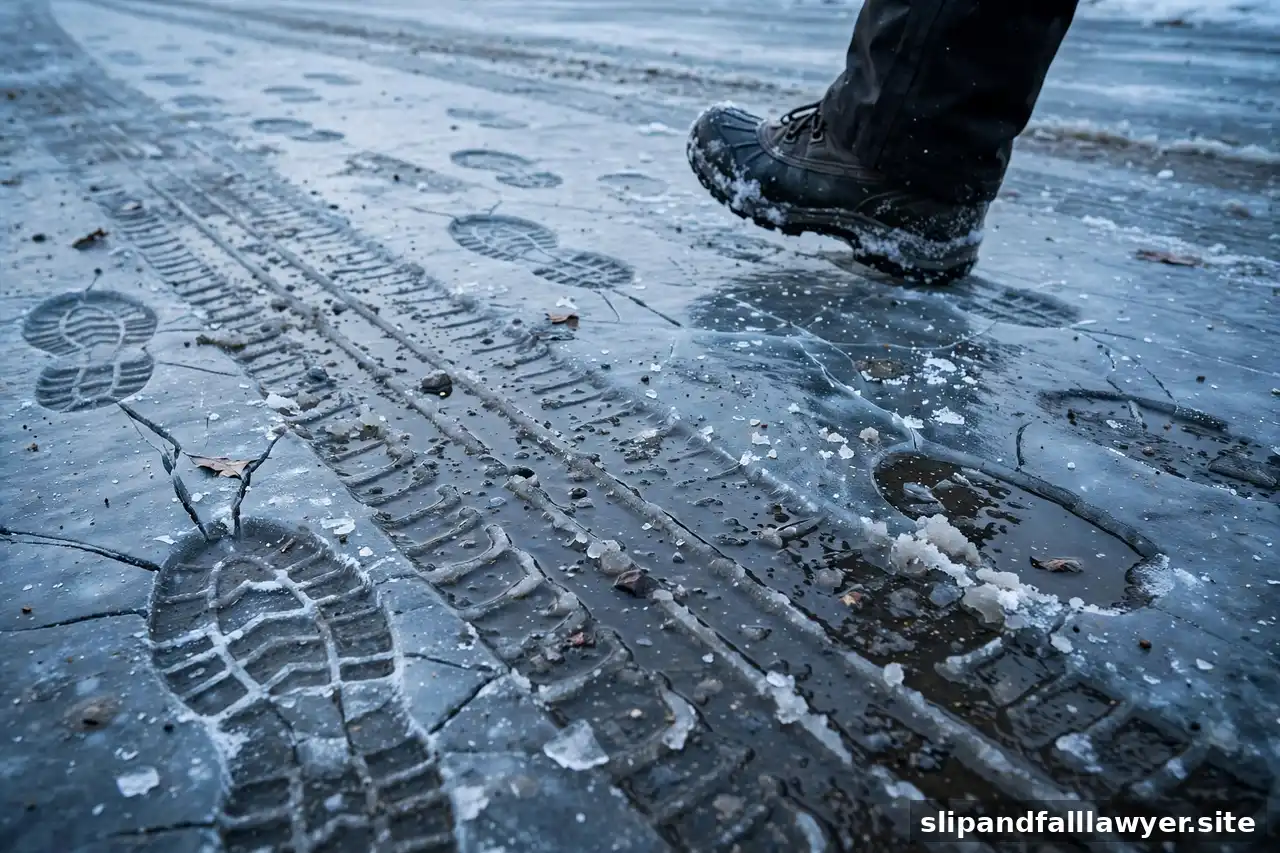
- Property owners and managers: sign snow-removal contracts before the first storm, stock ice melt, fix drainage that creates recurring ice patches, keep entrance mats in good repair, and log every clearing and salting visit with timestamps.
- Tenants: know what your lease says about snow removal, report untreated common areas in writing, and keep copies.
- Everyone: check forecasts before heading out, allow extra time so you are not rushing across ice, wear proper footwear, and keep your phone charged — you may need its camera more than its map.
Winter will do what winter does. Liability turns on what people did about it in the hours and days that followed — and on whether the evidence survived the thaw. Document early, treat promptly, and understand the local rules before you assume who was at fault.
Disclaimer: This article is general information, not legal advice. Laws vary by state — consult a licensed attorney about your situation.