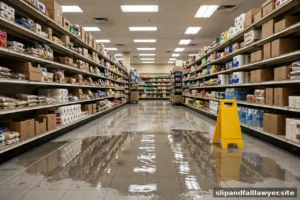
You slipped on a wet floor in a shopping center and broke your wrist. Who do you hold responsible — the store where you fell, the company that owns the building, the cleaning crew, or the mall’s management office? The answer is often “more than one of them,” and figuring out the right parties is one of the most consequential steps in a slip and fall case.
Liability in premises cases doesn’t always sit with the most obvious person. Commercial properties involve layered relationships — owners, tenants, managers, contractors, and sometimes government agencies — and any of them can share responsibility for an unsafe condition. This guide breaks down each potential party, explains when each one can be liable, and shows why identifying all of them matters for your claim.
Why More Than One Party Is Often Liable
Modern properties are rarely controlled by a single hand. A typical shopping center, for example, might be owned by a real estate investment firm, leased to individual stores, managed day-to-day by a property management company, cleaned by an outside janitorial contractor, and maintained in its parking lot by yet another vendor. When a visitor is hurt, the dangerous condition might be traceable to decisions made by several of these actors.
This matters for a practical reason: claims are paid from insurance policies and assets, and naming every responsible party increases the chances of full compensation. If you sue only the store but the building owner controlled the parking lot where you actually fell, you may have sued the wrong party — or only part of the right ones. A thorough claim looks at the whole chain of control.
Property Owners
The owner of the property is the starting point in almost every case. Owners generally carry the ultimate responsibility for keeping their premises reasonably safe, and they can’t simply delegate that duty away and wash their hands of it.
That said, an owner’s direct liability depends on how much control they actually exercise. An owner who manages the property personally — a small landlord who handles maintenance, or a homeowner whose icy walkway injures a guest — is squarely on the hook for conditions they knew about or should have discovered. An absentee owner who has leased the entire property to a single tenant with full maintenance responsibility may have a weaker connection to day-to-day hazards, though they typically remain responsible for structural issues and common areas they retained control over.
One common defense from owners is “the tenant was supposed to handle that.” Sometimes the lease really does shift maintenance duties to the tenant — but courts often hold that an owner can’t contract away responsibility for known dangerous conditions, especially structural ones. The lease matters, but it doesn’t automatically end the inquiry.
Tenants and Businesses Operating on the Property
The business where the fall happened is the defendant most people think of first, and often it’s the right one. A store, restaurant, or office tenant that controls its own space is responsible for hazards within that space: spills on the sales floor, cluttered aisles, loose mats, wet restroom floors, and similar conditions.
Tenants are typically judged on what happened inside their leased area during their operating hours. A grocery store, for instance, is expected to have reasonable inspection and cleaning routines — staff walking the aisles on a schedule, prompt responses to reported spills, mats at entrances during rain. When those routines break down and someone gets hurt, the business is a natural defendant.
Where it gets interesting is the boundary between the tenant’s space and shared areas. A store usually isn’t responsible for the mall’s common walkways or the parking lot — those belong to someone else in the chain, which is exactly why identifying all parties matters. During the holiday shopping season, when foot traffic surges and hazards multiply, these boundary questions come up constantly.
Property Management Companies
Many owners hire professional management companies to run their buildings: collecting rent, hiring maintenance staff, responding to complaints, and keeping common areas safe. When a manager takes on those duties, it can also take on liability for failing to perform them.
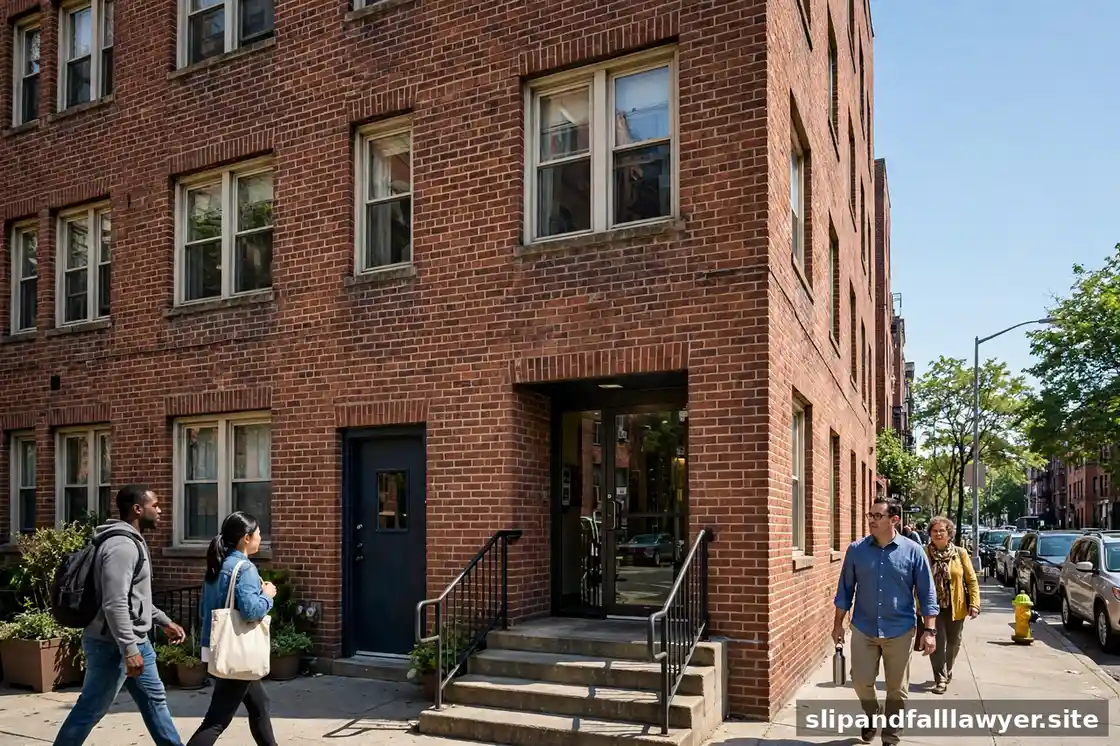
Management companies are most often implicated in residential and mixed-use properties — apartment complexes, office buildings, condo developments — where they control hallways, stairwells, elevators, lobbies, and parking areas. If tenants repeatedly report a broken stair rail and the manager does nothing, and someone later falls, the manager’s inaction is directly in the causal chain.
The key question is what the management agreement actually covers. A manager hired only to collect rent and handle leasing has a thinner connection to a maintenance hazard than one contracted for full facilities management. Claimants (or their attorneys) will want to see that agreement, along with maintenance logs and complaint records, to pin down who was supposed to do what.
Contractors and Maintenance Vendors
Outside contractors — janitorial companies, snow removal services, landscapers, elevator repair firms, construction crews — can be liable when their work creates or fails to fix a hazard.
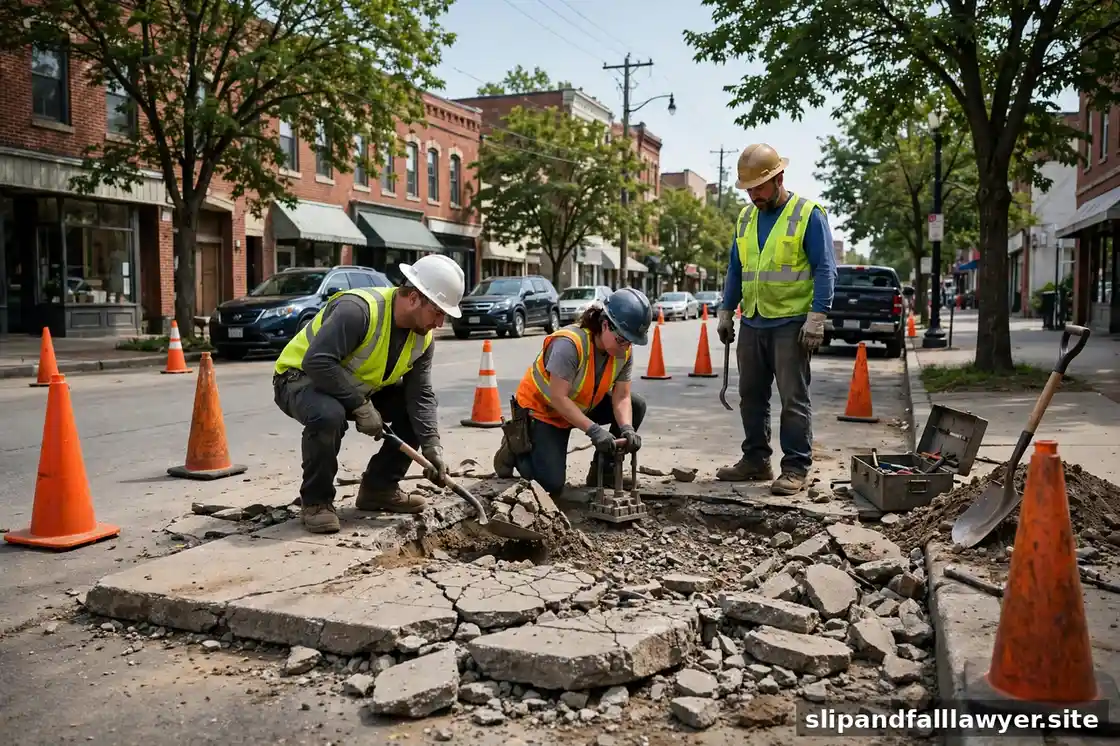
Consider a few scenarios: a cleaning company that mops a lobby floor and leaves it wet without warning signs; a snow removal contractor that piles snow where it melts and refreezes across a walkway; a repair crew that leaves tools, cords, or debris in a hallway. In each case, the contractor’s own negligence contributed to the dangerous condition, and it can be named as a defendant alongside the owner or manager.
Contractors sometimes argue they were just following the property owner’s instructions, or that the owner accepted their work. Those defenses can reduce but don’t always eliminate liability — a contractor that performs work negligently generally remains responsible for the foreseeable consequences, regardless of who hired it.

Government Entities
Cities, counties, and other public bodies own a huge amount of property where falls happen: sidewalks, parks, public buildings, courthouses, transit stations, and parking structures. They can be held liable for dangerous conditions on that property, but claims against them play by special rules.
Most states require advance notice of a claim against a government entity — sometimes within a matter of months, far shorter than the standard deadline for suing a private party. Miss that notice window and the claim may be barred no matter how strong the underlying facts. Governments may also enjoy partial immunity for certain discretionary decisions, like how to prioritize road repairs across a city.
Because the procedural traps are real and the timelines are short, anyone hurt on public property should get legal advice quickly. If your fall involved a sidewalk, public stairway, or government building, treat the clock as already running. General information about government services and how to reach the right agency is available at usa.gov.
Landlords in Residential Settings
Residential falls deserve special attention because the rules blend premises liability with landlord-tenant law. Landlords are generally responsible for common areas — hallways, stairs, laundry rooms, parking lots, exterior walkways — and for conditions inside a unit that they promised to repair or that violate housing codes.
A landlord who ignores repeated complaints about a broken step, a flickering hallway light, or a leaking pipe that keeps a bathroom floor wet is building a strong case against themselves. Written complaints are gold in these cases: they establish exactly the kind of notice that liability turns on.
Tenants, for their part, should report hazards in writing and keep copies. A verbal complaint to a super that goes nowhere is hard to prove later; an email or letter creates a paper trail that changes the dynamics of any future claim.
Employers and the Workplace Overlap
Falls at work add another layer: workers’ compensation. In most states, an employee hurt on the job is covered by workers’ comp regardless of fault — but that system generally bars the employee from suing the employer directly. The trade-off is guaranteed (if limited) benefits without having to prove negligence.
However, workers’ comp doesn’t block claims against third parties. A delivery driver who slips on an icy loading dock at a customer’s facility, or an office worker hurt by a contractor’s negligently maintained escalator, may have both a workers’ comp claim and a premises liability claim against the property holder. These parallel tracks are common and worth exploring with counsel. Our guide to slip and fall accidents at work digs into the details.
How to Identify the Right Parties in Your Case
Practically speaking, here’s how the responsible parties get sorted out:
- Start with where exactly you fell. Inside a store? The tenant is a lead candidate. In a shared hallway or parking lot? Look at the owner and manager.
- Ask who controls that spot. Control — the power to inspect, maintain, and fix — is the thread that connects a party to liability. Leases and management agreements spell this out.
- Look for vendors. If a contractor’s work touched the hazard (cleaning, snow removal, repairs), add them to the list.
- Check for government ownership. If any public entity is involved, calendar the notice deadline immediately.
- Preserve everything early. Contracts, logs, and footage get harder to obtain with time. A formal request or attorney letter early on prevents evidence from disappearing.
Understanding what duty of care each party owed you is the natural next step — because liability ultimately turns on whether the responsible party lived up to the duty it owed.
Disclaimer: This article is general information, not legal advice. Laws vary by state — consult a licensed attorney about your situation.
Liability in a slip and fall case is rarely a single name on a single door. Owners, tenants, managers, contractors, and public entities each hold a piece of the responsibility for keeping property safe — and a strong claim accounts for all of them. Once you know who can be held liable, the next question is what they were required to do, which is exactly what the duty of care covers.