Slip and fall accidents don’t happen randomly. They cluster in specific places — the same kinds of locations produce the same kinds of falls, year after year. Understanding where falls happen most isn’t just trivia: it shapes how strong a claim may be, what evidence to look for, and which hazards property owners should have anticipated.
This guide walks through the locations responsible for the most slip and fall injuries in the United States, explains what makes each one dangerous, and notes what the location tells you about a potential claim.
Why the Location of a Fall Matters Legally
Where you fell affects nearly every part of a claim. It determines who controlled the property (and therefore who may be liable), what duty of care applied (a store owes its customers the highest duty), what evidence exists (businesses often have cameras; private homes don’t), and how foreseeable the hazard was (a wet grocery floor is more foreseeable than a dry, well-lit hallway).
Location also shapes the insurer’s defenses. A fall in a store aisle invites questions about inspection routines; a fall on a sidewalk raises questions about government notice rules; a fall at work triggers workers’ compensation. Knowing the patterns helps you anticipate the fight ahead — and gather the right evidence from day one, as our guide to what to do after a fall explains.
1. Grocery Stores and Retail Shops
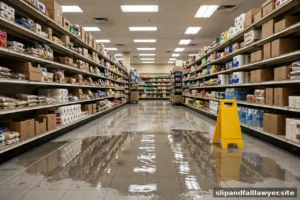
Stores are the single most common setting for slip and fall claims, and it’s not close. The reasons are structural: high foot traffic, constantly changing floor conditions, and hazards that appear and disappear throughout the day.
Why it’s dangerous: spills from products and customers’ drinks, wet produce sections, leaking refrigeration cases, freshly mopped floors, cluttered aisles and displays, loose floor mats, and tracked-in rain or snow near entrances. Any one of these can appear between inspections.
What it means for a claim: stores owe customers (invitees) the highest duty, including regular inspection. The central question is usually whether the store’s inspection routine was reasonable and whether the hazard existed long enough that staff should have found it. Surveillance footage and sweep logs are often decisive — which is why requesting them early matters.
2. Parking Lots and Parking Garages
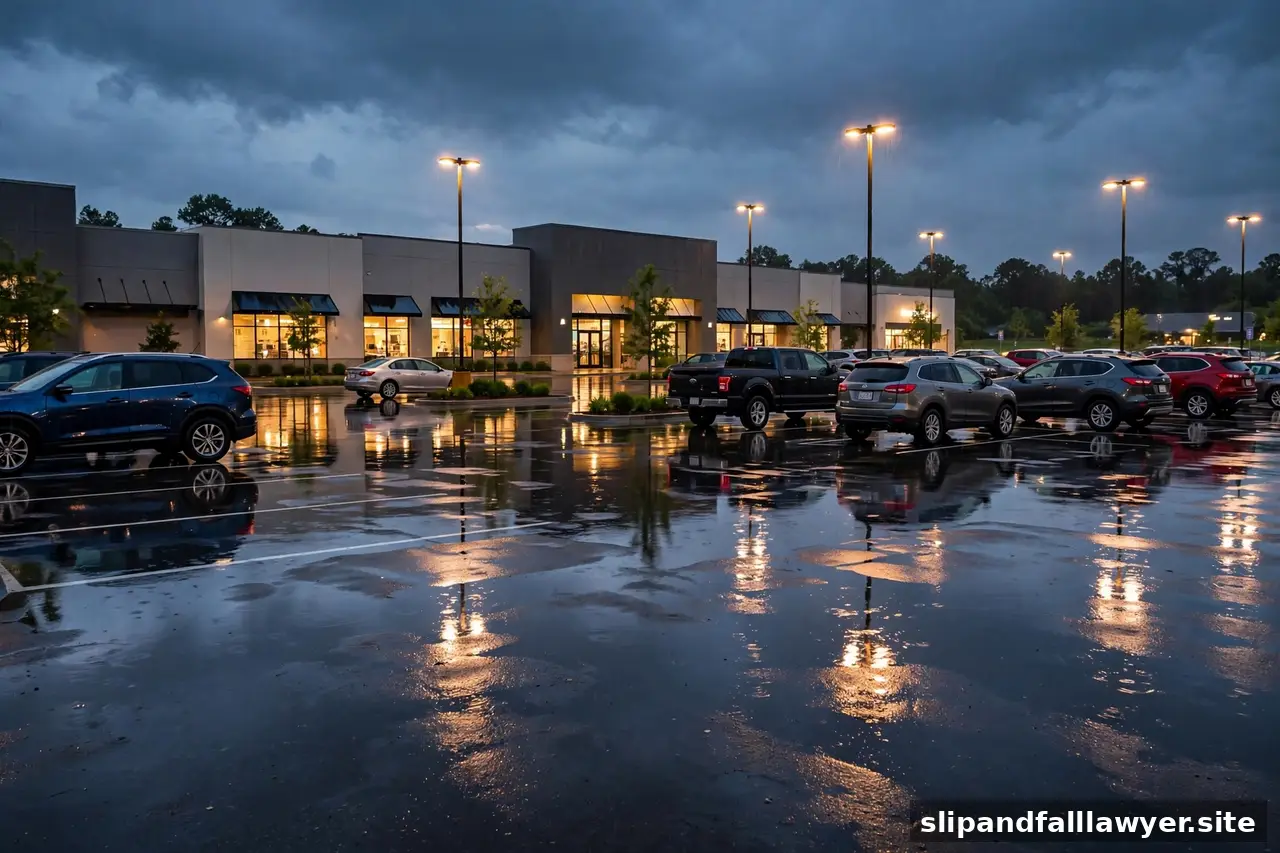
Parking areas generate a large share of fall injuries, especially in winter and after rain. They’re transitional spaces — people moving between their cars and the building, often distracted, carrying bags, and watching traffic rather than the ground.
Why it’s dangerous: potholes and cracked pavement, poor lighting, oil slicks, ice and snow accumulation, faded or missing striping, wheel stops and speed bumps that catch feet, and drainage failures that leave standing water.
What it means for a claim: responsibility for parking lots is often disputed — the store tenant may say the landlord controls it, the landlord may point to a maintenance contractor. Identifying who actually maintained the lot is a critical early step. Poor lighting claims pair naturally with inadequate-maintenance arguments, since both point to long-term neglect rather than a momentary spill.
3. Restaurants, Bars, and Cafes
Food service floors are hazard factories: liquids, grease, food scraps, and crowded dining rooms combine with dim lighting and hurried staff.
Why it’s dangerous: spilled drinks and food in dining areas, greasy kitchen-adjacent floors, wet restrooms, crowded aisles between tightly packed tables, and outdoor patios that get slick in rain.
What it means for a claim: restaurants have the same high duty to customers as stores, and their hazards are highly foreseeable — a busy restaurant should expect spills. Evidence often includes staff testimony about cleaning routines and whether the spill was reported before the fall.
4. Workplaces: Offices, Warehouses, and Job Sites
Falls at work span every industry. Office workers slip on wet lobby floors; warehouse staff trip over pallets and cords; construction workers fall from ladders, scaffolds, and unprotected edges. Workplace falls are common enough that federal safety regulators track them closely — OSHA’s guidance on walking-working surfaces is a useful reference (osha.gov).
Why it’s dangerous: varies by setting — cluttered floors, trailing cables, wet entryways, uneven loading docks, ladder and scaffold hazards, and inadequate fall protection on job sites.
What it means for a claim: workplace falls usually involve workers’ compensation first, which covers employees regardless of fault but limits direct suits against the employer. Third-party claims against property owners or contractors may still be available. Our article on slip and fall accidents at work untangles when each path applies.
5. Sidewalks and Public Walkways
Uneven sidewalks injure thousands of people every year — raised slabs from tree roots, cracked and crumbling sections, missing chunks, and ice that never got cleared.
Why it’s dangerous: pedestrians don’t expect the ground itself to be the hazard. A slab raised even an inch or two by roots is enough to catch a toe, and poor nighttime lighting makes defects invisible until it’s too late.
What it means for a claim: sidewalk responsibility is a patchwork — sometimes the city, sometimes the adjacent property owner, depending on local ordinances. Claims against government entities come with short notice deadlines, so identifying the responsible party fast is essential.
6. Hotels, Lobbies, and Stairwells
Hotels combine several risk factors: highly polished floors chosen for appearance over traction, guests unfamiliar with the layout, luggage that distracts, and pool and spa areas that stay wet.
Why it’s dangerous: marble and polished stone lobbies, wet pool decks, dimly lit stairwells, loose carpeting or rugs, and luggage carts left in corridors.
What it means for a claim: hotels owe guests the highest duty and have deep documentation — incident reports, housekeeping logs, and extensive camera coverage. That cuts both ways: the evidence exists, but the hotel controls it, so formal preservation requests matter.
7. Private Homes and Apartment Common Areas
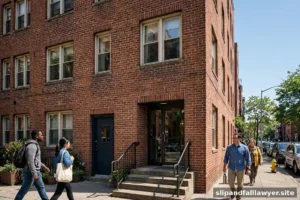
Residential falls often involve stairs, poor lighting, and exterior walkways — and they raise distinct legal questions about landlord responsibility versus homeowner liability to guests.
Why it’s dangerous: broken or missing handrails, uneven steps, poor hallway lighting, icy driveways and walkways, cluttered common areas, and unfixed leaks that keep floors wet.
What it means for a claim: for renters, the landlord’s duty over common areas and promised repairs is central — written maintenance complaints become key evidence. For social guests at a private home, the homeowner’s duty centers on warning about known hidden dangers.

8. Gas Stations and Convenience Stores
Gas stations combine wet forecourts, oil-stained concrete, and high customer turnover in all weather. They’re easy to overlook as fall locations, but they generate a steady stream of claims.
Why it’s dangerous: rain-slicked pump islands, spilled fuel and oil, uneven concrete around pumps, poorly lit canopies at night, and cluttered convenience store aisles with restocking carts during business hours.
What it means for a claim: most gas stations are franchises or dealer-operated, so the liable party may be the operator, the brand, or the property owner depending on the agreements in place. Canopy lighting and forecourt maintenance records are the evidence to pursue, and nighttime falls should prompt questions about whether the lighting met basic safety expectations.
9. Nursing Homes and Healthcare Facilities
Falls in care facilities carry extra weight because the victims are often elderly and frail — the same population most vulnerable to serious injury from even a minor fall. Facilities that house people known to be at high fall risk are held to a demanding standard.
Why it’s dangerous: polished corridors, wet bathroom floors, beds at improper heights, missing or broken grab bars, inadequate supervision of high-risk residents, and cluttered hallways with carts and equipment.
What it means for a claim: beyond standard premises liability, care facilities may face claims based on their duty to assess each resident’s fall risk and take precautions accordingly — non-slip footwear protocols, bed alarms, supervised transfers. Medical records documenting the facility’s own fall-risk assessment can become powerful evidence when those precautions weren’t followed.
Seasonal Spikes: When Falls Surge
Two seasons produce noticeable spikes. Winter brings ice, snow, and freeze-thaw cycles that turn walkways and parking lots treacherous — and generate disputes about who was responsible for clearing them and how quickly. The holiday shopping season brings crowds, rushed staff, seasonal displays narrowing aisles, and wet entrances from constant foot traffic. Our piece on holiday shopping season falls covers that surge in detail.
Seasonality matters legally because it goes to foreseeability: an owner can’t claim surprise at ice in January or crowds in December. Foreseeable risks must be planned for, and failure to plan is itself evidence of negligence.
What These Patterns Tell You About Your Claim
Three lessons emerge from where falls happen:
- Foreseeability favors the injured person. The more obviously a location invites a particular hazard — spills in grocery stores, ice on winter walkways — the harder it is for the owner to claim they couldn’t have anticipated it.
- Evidence follows the setting. Commercial locations usually have cameras, logs, and staff witnesses; residential and public locations often don’t. Tailor your evidence gathering to the setting from the first day.
- The duty tracks the relationship. Businesses owe customers the highest duty; landlords owe tenants strong duties over common areas; governments owe duties hedged with procedural rules. The location tells you which framework applies.
Disclaimer: This article is general information, not legal advice. Laws vary by state — consult a licensed attorney about your situation.
Where a fall happens is never just background detail — it’s evidence about foreseeability, duty, and who controlled the hazard. If you’ve been hurt, document the location thoroughly and review our step-by-step guide to what to do after a fall before the trail goes cold.